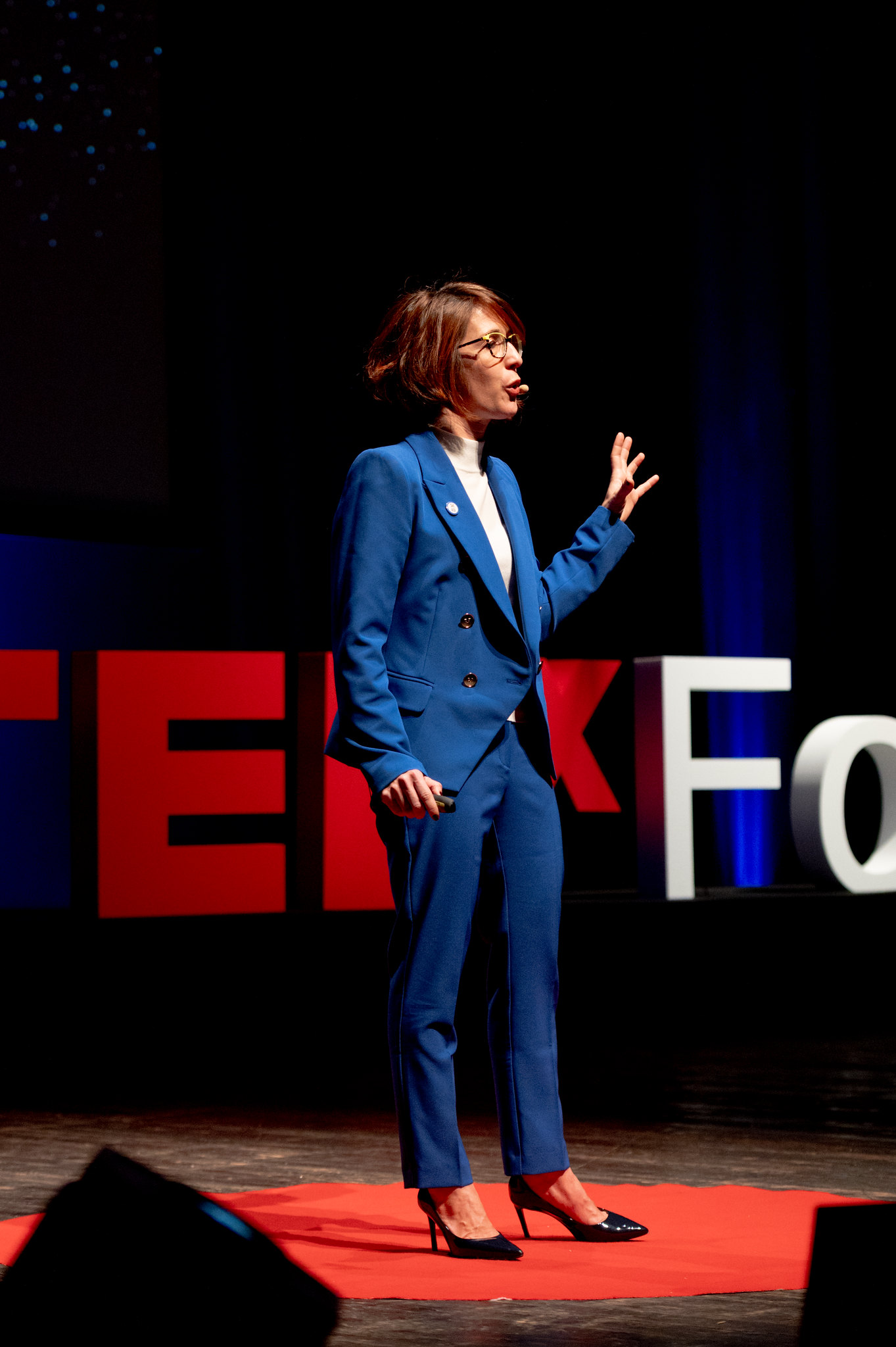
About non-linear academic pathways.

My academic pathway has not always been linear: a graduate of the Collegio Superiore University of Bologna, I obtained my Master’s degree in Medical Biotechnology in 2006 with an experimental thesis in gene therapy at the International Centre for Genetic Engineering and Biotechnology in Triest, under the supervision of Giovanna Cenacchi (University of Bologna), Lorena Zentilin and Mauro Giacca (ICGEB). I then decided to leave the molecular biology bench to train in philosophy of life sciences and ethics in a newly inaugurated (at that time) PhD programme called “Foundations of Life Sciences and Ethics” (Folsatec), a collaboration of the European School of Molecular Medicine and the University of Milano.

I defended my PhD viva in October 2010, with an empirical ethics dissertation investigating the ethical issues of Phase 0 trials in oncology (supervised by Proff Giovanni Boniolo and Gordon McVie).

In October 2010 I also embarked on a new PhD programme in Philosophy of Medicine at King’s College London, funded by a Wellcome Trust fellowship and supervised by Matteo Mameli and David Papineau.

For the 2011/2012 academic year I was a visiting fellow at the Department of Humanities and Social Sciences (formerly known as “Department of Anthropology, History and Social Medicine” or DASHM) at University of California, San Francisco, where I worked with Professor Dorothy Porter and Brian Dolan on ethical issues of gene therapy applied to a variety of settings. I defended my PhD in October 2013 with a thesis titled “From bench to bedside, to track and field: the context of enhancement and its ethical relevance”, which became a book published with UC Medical Humanities Press in 2014.

In October 2013 I successfully applied for a three-year fixed term Lecturer position in Bioethics & Society in the newly established – at that time – department of Social Science, Health and Medicine at King’s College London, chair by the sociologist Nik Rose, who had the vision to launch the first Bioethics & Society programme grounded in social sciences approach and department in the UK. I had the privilege of directing the programme for close to 9 years, with short periods of interruptions due to parental leave. After an accelerated probationary period my position was converted to an open-ended Lecturership position in May 2015. In June 2018 I was promoted to Senior Lecturer and in September 2021 to Reader.

In September 2022, I took the decision to resign from King’s College London. It wasn’t an easy decision however the working conditions had changed for European scholars working in UK academia since Brexit, my department had also shifted its focus away from bioethics towards global health, and it was time for me to leave the UK.

From October 2022 to October 2023, I served as a Senior Research Fellow (Solidarity Fellow) in the Centre for the Study of Contemporary Solidarity at the University of Vienna, where I focused on doing research at the intersection of public health ethics and public policy.

In October 2023, I accepted a 1-year research fellowship position at the University of Bologna working with Raffaella Campaner, Francesco Bianchini and Francesco Guala, on an Italian Ministry of Research funded project on “normative kinds“. In this new role I am enjoying investigating new topics in the philosophy of medicine and science, and enjoying a freedom of doing research.

For the 2023/24 academic year I also hold the position Visiting Professor, Sowerby Project Philosophy of Medicine, Department of Philosophy, King’s College London.

I don’t know what’s going to be my next step, but if you’re reading me and are a PhD student or a junior scholar just starting out in academia, here’s one thing I have learnt form this journey thus far: career pathways and trajectories are often not linear or straightforward, nor are life pathways.

If I have learnt something along the way, is the following: the most important thing is the people you encounter in your trajectory, the connections you make along the way, the network you create.

Keep close to you the people you meet along the ways, the junior and senior colleagues, the students, the admin support staff, the people who serve you coffee at the university café. People are more important than institutions.

Recording of keynote at T.M.C Asser Institute, The Hague, October 27th, now available

On 26 and 27 October 2023, the T.M.C Asser Institute in The Hague hosted the 2023 edition of the International Sports Law Journal (ISLJ) Conference. I delivered the keynote lecture on day 2 titled “Eligibility criteria to compete in the female category: Values, norms and evidence”.

Abstract

There is a fundamental tension intrinsic in athletics: human sex is not binary, and there are only two categories in which people can compete: men, and women. In the late 1990s, all forms of sex testing had been abandoned by the International Olympic Committee due to some high-profile false positive cases. After a brief interval, sex testing re-emerged in 2009 with the case of South-African runner Caster Semenya, whose gold medal at the World Track & Field Championship in Berlin was revoked on suspicion of an unfair advantage derived from a “male biological make-up”. Following an investigation, in May 2011, World Athletics (WA)  enacted ‘Hyperandrogenism regulations’ which require that female athletes with endogenous testosterone levels above 5 nmol/Lit take androgen suppressive therapy as a condition to compete in the female category.   Since the original formulation, the WA Hyperandrogenism regulations have undergone multiple iterations, the most recent one in March 2023, and have been at the centre of three high profile legal disputes, two at the Court for Arbitration of Sport also known as the “Supreme Court for Sports” (2015; 2019), and one at the European Court of Human Rights (2023). Another one is forthcoming at the Grand Chamber of the European Court of Human Rights in 2024. In this talk I review the evidence, values and norms underlying the World Athletics regulations to compete in the female category for athletes with DSD.

The recording is now available here.

Ultimo colpo di scena nella vicenda di Caster Semenya: la Corte Europea per i Diritti Umani riesaminerà da capo il caso Semenya vs. Svizzera

.

Ultimo colpo di scena nella vicenda dell’atleta sudafricana Caster Semenya che va avanti dall’agosto del 2019.

Il 7 novembre 2023 la Corte Europea per i Diritti Umani (European Court for Human Rights, ECHR) ha affermato che prenderà in considerazione l’appello del Tribunale Federale Svizzero contro la decisione della stessa ECHR presa qualche mese fa.

L’11 luglio del 2023 la Corte Europea per i Diritti Umani aveva emesso la tanto attesa sentenza (dopo 2 anni e mezzo!) riguardo al caso Semenya e aveva affermato, sulla base di una decisione raggiunta con una maggioranza di 4 voti a 3, che l’atleta sudafricana era stata discriminata sulla base della violazione di tre articoli della Convenzione Europea per i Diritti Umani:

  1. articolo 14: divieto di discriminazione,
  2. articolo 8: diritto al rispetto della vita privata,
  3. articolo 13: diritto a un ricorso effettivo.

Qual è il significato di questo ultimissimo colpo di scena nella vicenda di Caster Semenya, che va avanti dall’agosto del 2009?

Il significato è che si ricomincia da zero: ora toccherà alla Grand Chamber della ECHR, la camera principale, composta di 17 giudici (contro il 7 che avevano emesso la sentenza di giugno) esaminare il caso Semenya vs. Switzerland (application no. 10934/21).

Gli esiti di questa riesamina possono essere i più disparati: da una riconferma della sentenza di luglio 2023 (possibile anche con una maggioranza più netta, e con una decisione che coinvolga altri articoli della Convenzione, compreso l’articolo 3, il diritto all’integrità della persona); oppure a un ribaltamento della sentenza di discriminazione ai danni di Semenya.

È tutto da vedere. La decisione della Grand Chamber sarà quella finale.

Per saperne di più, ci sono altri 8 reel (numerati) che ripercorrono la vicenda Semenya e che puoi trovare sul mio sito personale di ricerca a questo link: https://shorturl.at/bezTZ

Seguimi sulla mia pagina instagram silviacamporesibioetica per restare aggiornato sulla questione dell’eredità culturale di Semenya per il diritto internazionale sportivo.

##castersemenya  #humanrights #ECHR #Semenya #SemenyavsSwitzerland #dirittiumani #eticasportiva