Tag Archives: World Athletics

‘Science & Society’ Talk, Wednesday December 9th, 2026- “Who decides and on which basis who counts as a woman in sport? An overview of regulations from 1999 to 2026”

I am delighted to have been invited to deliver a talk within the ‘Science & Society’ series at KU Leuven’s Institute for Genetics & Society (LIGAS).

Date & Time: 9 December 2026 (Wednesday) from 12:00 to 13:00
Location: Auditorium O&N4, Gasthuisberg Campus, Leuven
Access: Free to attend, no registration needed – just show up!

I will be talking on one of the most debated questions in sport today: how sporting bodies have decided who is eligible to compete in the women’s category, and what science has been asked to do in that process.

Short abstract:

Who is allowed to compete in the women’s category, and who gets to decide? For more than two decades, international sports federations have struggled with this question. The resulting eligibility rules have repeatedly shifted between different biological markers, from chromosomes and hormone levels to genetic testing. In this talk, Silvia Camporesi traces how these regulations have developed from 1999 to the present, and asks on which scientific and ethical grounds each policy was built. She looks at the role biomedical evidence has played in these decisions, at the tension between fairness in competition and the rights and well-being of individual athletes, and at what this history reveals about how science is used when institutions draw boundaries.
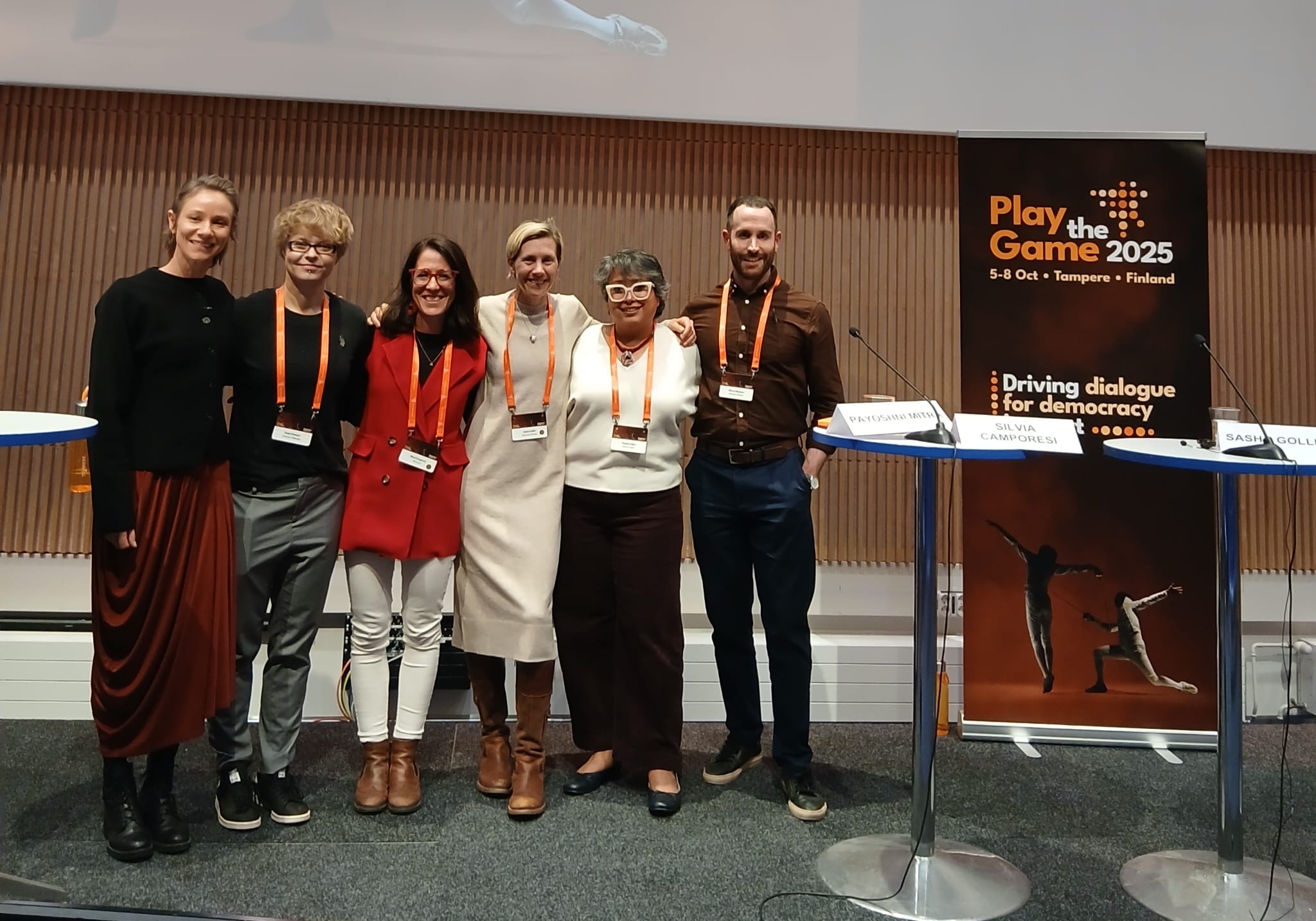

Recording of Play The Game panel on “The return of sex testing in international sport: is it justified? is it ethical?” available

The recording to today’s panel at Play The Game on “The return of sex testing in international sport: is it justified? is it ethical?”

is now available here.

Big thanks to Madeleine Pape for organising this panel, and to my wonderful fellow panelists Sone Erikainen, Payoshni Mitra, Sasha Gollish and Marcus Mazzucco (a pleasure finally meeting in person).

And the biggest thanks goes to the athletes harmed by the regulations who came to listen to us: Caster Semenya, Annet Negesa, Evangelina Matena Kyatena. What a privilege to have you in the room.

Recording of keynote at T.M.C Asser Institute, The Hague, October 27th, now available

On 26 and 27 October 2023, the T.M.C Asser Institute in The Hague hosted the 2023 edition of the International Sports Law Journal (ISLJ) Conference. I delivered the keynote lecture on day 2 titled “Eligibility criteria to compete in the female category: Values, norms and evidence”.

Abstract

There is a fundamental tension intrinsic in athletics: human sex is not binary, and there are only two categories in which people can compete: men, and women. In the late 1990s, all forms of sex testing had been abandoned by the International Olympic Committee due to some high-profile false positive cases. After a brief interval, sex testing re-emerged in 2009 with the case of South-African runner Caster Semenya, whose gold medal at the World Track & Field Championship in Berlin was revoked on suspicion of an unfair advantage derived from a “male biological make-up”. Following an investigation, in May 2011, World Athletics (WA)  enacted ‘Hyperandrogenism regulations’ which require that female athletes with endogenous testosterone levels above 5 nmol/Lit take androgen suppressive therapy as a condition to compete in the female category.   Since the original formulation, the WA Hyperandrogenism regulations have undergone multiple iterations, the most recent one in March 2023, and have been at the centre of three high profile legal disputes, two at the Court for Arbitration of Sport also known as the “Supreme Court for Sports” (2015; 2019), and one at the European Court of Human Rights (2023). Another one is forthcoming at the Grand Chamber of the European Court of Human Rights in 2024. In this talk I review the evidence, values and norms underlying the World Athletics regulations to compete in the female category for athletes with DSD.

The recording is now available here.