
I am delighted to announce that the first BIOS event will take on January 26th at 1:15 pm via Zoom. Professor Ilana Löwy, Senior Researcher at the French National Center for Scientific Research (CNRS) and Visiting Professor at GHSM, on the topic of:
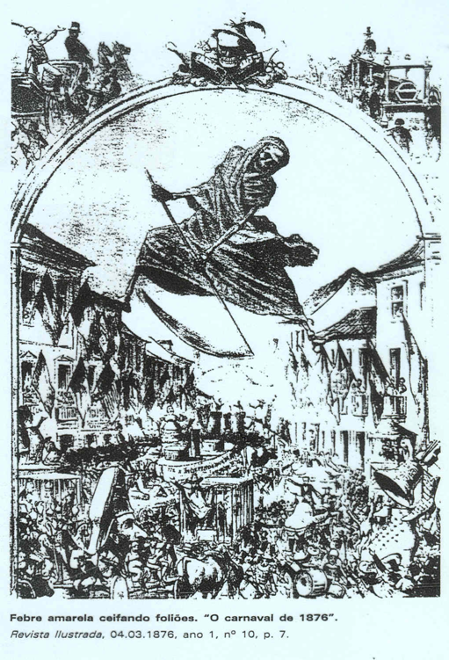
How to prevent a vaccination disaster? Lessons from a massive contamination of yellow fever vaccine during WWII.
When: Tuesday Jan 26th 1:15 -2:30 pm
Where: Zoom Meeting
EMAIL ME AT silvia.camporesiATkcl.ac.uk for the zoom link!
About the speaker:
Professor Ilana Löwy is senior researcher at the French National Center for Scientific Research (CNRS) and Visiting Professor at GHSM. Trained as a biologist and as a historian of science and medicine, her research focuses on the relationship between laboratory investigations and clinical practices during the twentieth century. This includes the bacteriological revolution; the history of bacteriology and immunology; the history of medicine and the biomedical sciences in ‘peripheral’ countries (Latin American and Eastern European countries); evolution prenatal screening and prenatal testing, gender and biomedicine.
Abstract
The rapid manufacture of anti-covid vaccine is often presented as an unprecedented event. This is inaccurate. In late 1930s the life attenuated 17D vaccine against yellow fever was produced and massively applied in a record time (less than a year). 17D was, and still is, an excellent vaccine. Its rapid diffusion led, however, to several problems, the most important among them was the massive contamination of yellow fever vaccine distributed in 1942 to the US army by hepatitis B virus. The US part of this story is — relatively– well known, but its Brazilian part much less. In 1940 scientists who produced the 17D vaccine in Rio de Janeiro found out that it was contaminated by an ‘icterus virus’ originated in normal human serum. They solved this problem through the exclusion of human serum from the vaccine’s production chain, but failed to persuade their US colleagues to accept their conclusion. The Rio experts, aware of potential pitfalls of a new technology, systematically supervised the consequences of their vaccination campaigns. They were thus able to rapidly spot problems linked with vaccination and eliminate them. By contrast US scientists, persuaded of their technical superiority and distrustful of warnings originated in a ‘less developed’ country, neglected to implement basic public health rules. A major health disaster followed.

 Prof. Silvia Camporesi
You must be logged in to post a comment.